
Advice on the LinkedIn company page vs personal profile question stops at one line: personal profiles get more engagement, so post there. That is true as far as it goes, and it misses what matters to a founder.
The two are not rivals for the same job. The profile starts conversations. The page confirms you are real when someone checks you out.
Judge each by what reaches your inbox, not by what shows up in analytics. Then the division of labor is easy to see, and so is the handoff between the two.
What is the difference between a LinkedIn company page and a personal profile?
A company page represents an organization, while a personal profile represents one individual. The profile can connect, message and comment as a person. The page cannot start one-to-one conversations, but it can run ads, list jobs and act as the official home of the business.
The difference that matters most is who can reach whom. A profile can message its connections, and with Premium or Sales Navigator, InMail reaches people outside your network. A company page cannot proactively connect with targeted prospects. It relies on organic interactions and paid sponsored updates.
The page also has tools a profile lacks: the Follow button, career pages, product pages and premium analytics features. Those are company-page-only. So are LinkedIn Ads, which run exclusively from company pages.
Why does the personal profile usually win for founders?
Because a founder can answer back. When someone comments on your post, you can reply, open their profile, and send a message the same afternoon. A company page is mostly passive: it posts and waits.

A founder can reply the same afternoon, and that reply is where the conversation begins.
Some third-party sources report that personal profiles generate five to eight times the engagement of company pages for equivalent content and follower counts. Treat that as a claim, not a law. The mechanism behind it is easy to believe, though: people respond to people.
The more useful difference shows up in the inbox. After a good founder post, the signals are direct messages, connection requests from people who fit the buyer profile, and "can we talk?" notes that reference something you wrote. After a company page post, the usual result is a handful of reactions from colleagues and very little else.
A founder post produces people you can talk to. A page post mostly produces numbers.
What can only a company page do?
It has real jobs, and none of them are starting conversations. The first is advertising. LinkedIn Ads run from the page, so if paid is in your plan, you need one that is set up properly.

Before a prospect replies, they check the company behind the founder, and the page has to hold up.
The second is hiring. Career pages belong to the company page, and candidates look there to judge whether the business is serious.
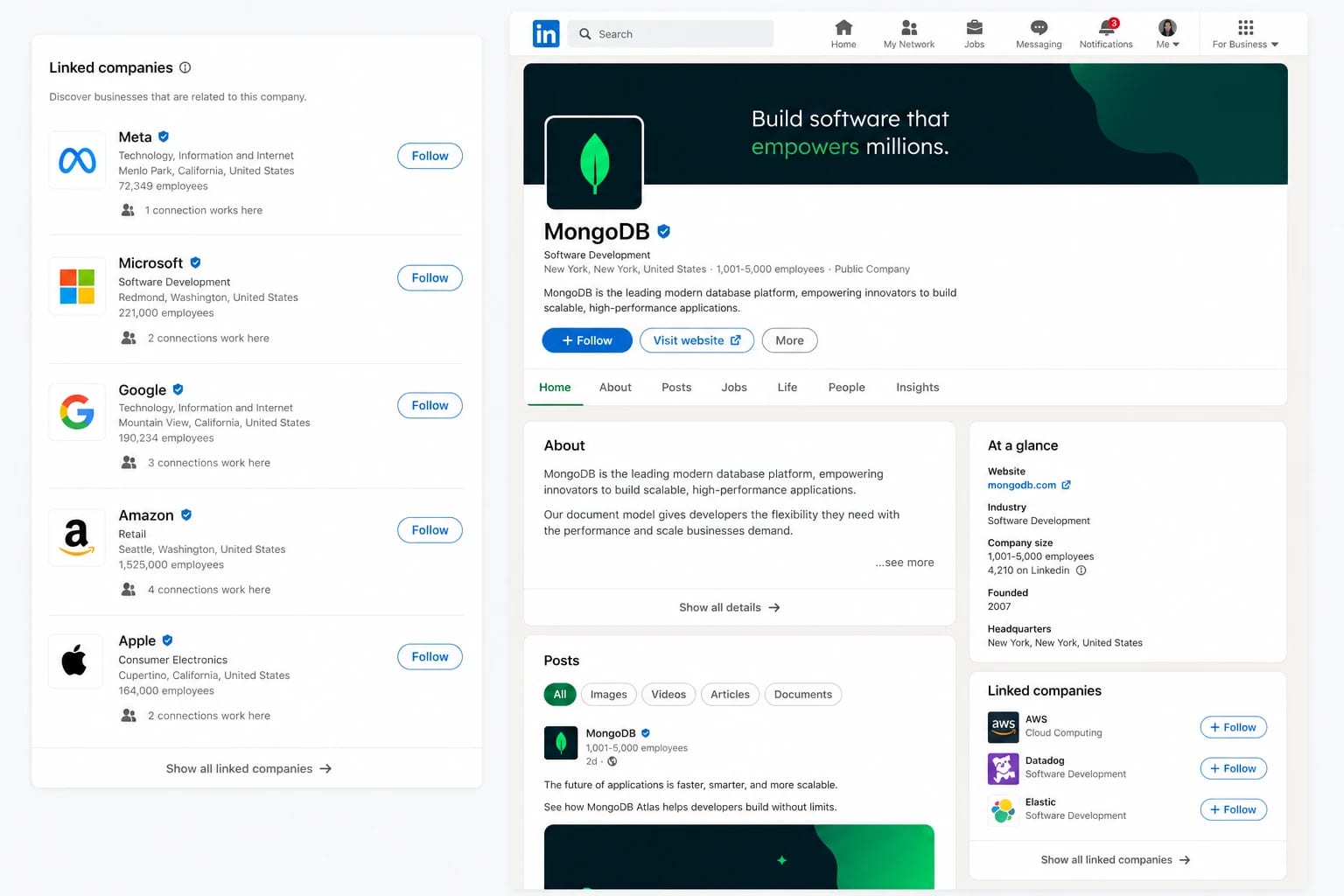
The third is the credibility check. A prospect who likes a founder's post will often click through to the company named in the headline. They are looking for a clear description, a real logo, a working website, and signs that other people work there.
There is one interesting overlap. Thought Leader Ads can promote content only if it starts from someone's personal profile, which a company page cannot do on its own. So even the paid side depends on the founder being worth listening to.
LinkedIn company page vs personal profile: should you post as your company or as yourself?
Use a simple rule. Opinions, stories, lessons and anything with a point of view come from the person. Announcements, job openings, product updates and event details come from the page.
The counterintuitive part is that a quiet company page is fine when the founder is active. A page posting twice a month that is accurate and complete does its job. A page posting daily generic content that no one reads does not make up for a silent founder.
If you have to choose where effort goes, put it on the profile first. Founders who ask whether to post as company or personal on LinkedIn are usually asking the wrong question. The right one is what each post needs to do. If it needs a reply, it should come from a person.
How do the two work together?
Think of it as a relay. The founder's post earns attention. The profile, through the headline and Experience section, links to the company page. The page then backs up what the founder claimed.

When colleagues share from their own profiles, page announcements reach people the page never could.
Team amplification fills the gap in the middle. Employee advocacy simply means colleagues sharing and commenting on page content from their own profiles, so announcements reach people who would never see them from the page alone. We set this up as part of how we run company pages and team amplification.
The common failure is an unlinked, empty page. A prospect reads a strong founder post, clicks the company name, and finds no logo, a vague description and no activity. The profile made a promise and the page did not keep it.
Check the handoff the way a buyer would. Start from the founder's profile, click the company, and ask whether the page confirms the story in under ten seconds.
FAQ
Should I post on my company page or my personal LinkedIn profile?
Post opinions, stories and lessons from your personal profile, because that is where replies and conversations happen. Use the company page for announcements, jobs and product news. If you can only keep up one, choose the profile.
Can I create a company page on LinkedIn without a personal profile?
Not in practice. A company page is created and managed by a person with a personal profile, who becomes its admin. The profile does not have to be prominent, but it has to exist and ideally look credible.
Can I separate my business page from my personal account on LinkedIn?
They are already separate things: the page represents the organization and the profile represents you. You can control who has admin access to the page. What you should not do is separate them completely, because the profile should point to the page.
Where to start this week
The Linkedin company page vs personal profile choice is a division of labor. Fix the founder's profile first, so it starts conversations, then make the page match so it holds up when someone checks.
If you want a second pair of eyes on both, get a free LinkedIn audit of your profile and company page.