

Most advice about why your LinkedIn outreach gets ignored starts with the message. Rewrite the opener. Personalise the first line. Shorten the ask. Add a P.S.
None of that is wrong. It is just fifth in line, and almost nobody says so. The message is the last thing a prospect reads, which means it is also the last place the reply decision gets made. By the time they are reading your words, they have already run a quiet credibility check on you, and most outreach fails that check, not the copy test.
The problem is the sender. Specifically, the profile behind the sender, the targeting list that put this prospect in your queue, and the sequence of events between connection acceptance and the first DM. Fix those three things and the same message that was being ignored will start getting replies.
What actually happens before a recipient reads your message
Before a prospect reads a single word of your outreach, they run a short, unconscious sequence: they glance at your name and headline in the notification, open your profile, skim your photo, headline, and recent activity, check for mutual connections, and form a snap judgment about whether you are credible enough to reply to. That judgment is made in seconds and it has nothing to do with your message copy.
Most founders treat the message as the variable. The prospect is treating the sender as the variable. Those are different problems with different fixes.
Understanding that sequence is the whole game. Once you see it clearly, you stop editing subject lines and start auditing the thing the prospect is actually evaluating.
Your profile is being judged in under ten seconds
When we review founder profiles ahead of an outreach campaign, the same three problems appear repeatedly. Each one costs reply rate before the prospect ever reaches the message. Research on LinkedIn prospecting confirms that profile quality directly affects outreach acceptance rates, but the mechanism matters more than the finding.

A prospect scans your profile in seconds, and that snap judgment happens long before they read your message.
- A job-title-only headline. "CEO at Acme" tells a prospect nothing about why your message is relevant to them. A headline that names the problem you solve or the outcome you create gives a prospect a reason to keep reading. Without it, you look like every other cold sender in their inbox.
- An empty content history. A prospect who opens your profile and sees no posts, no articles, and no activity is looking at a blank character reference. There is no signal that you know what you are talking about, no tone, no point of view. The absence of content does not read as neutral. It reads as unverifiable.
- A logo or a blurry photo where your face should be. A company logo as the profile picture signals that a human being is not really behind the account, or that whoever is has not invested enough attention to use a real photo. Either reading kills trust before the first word.
Acceptance rate and reply rate are two different signals measuring two different things. A profile that gets connections accepted is not necessarily a profile that earns replies. Someone might accept a connection out of professional reflex and then decide not to respond when they see no evidence of credibility behind the request.
Targeting is the variable everyone skips past
Most ignored LinkedIn outreach is a targeting failure wearing a messaging failure's clothes. If the person receiving your message does not own the problem you are pitching, no amount of copy polish recovers the reply. They are not ignoring you because the opener was flat. They are ignoring you because the message is not about their life.
A common pattern: a founder selling a finance operations tool sends outreach to VP-level contacts at companies in the right industry. The list looks correct on paper. But half those contacts are in corporate finance at large enterprises where the problem does not exist in the same form, the budget motion is different, and no one person owns the decision. The message arrives, it is personalised and clear, and it goes unanswered. The founder rewrites it. Same result. The list was the problem.
Before you adjust a single word, confirm that the person receiving the message actually feels the pain you are describing, has the authority to act on it, and is at a company where your solution fits the context. If any one of those is off, the message is irrelevant regardless of how it reads.
The trust gap that opens between connection and first message
There is a window between a connection being accepted and a first message being sent that most founders waste completely. The prospect has said yes to the connection. They are mildly curious. Their guard is lower than it will ever be again. And then a pitch arrives within hours.

The hours after a connection accepts are for warming up trust, not for firing off a pitch.
That pitch lands in the same mental category as every other cold approach they have received. The connection acceptance was not a signal that they wanted to be sold to. It was a signal that they were open to the relationship. Sending a pitch immediately collapses that opening.
How Signal House approaches this for the founders and executives we work with: we treat the 48 hours after a connection accepts as a warm-up window, not a close window. The workflow looks like this.
- Engage with their recent content. A genuine comment on a post they published in the last week costs two minutes and registers as a human signal, not a sales signal.
- Let your own content do credibility work. If your feed has a post that is directly relevant to the problem they face, that post is doing outreach for you without you having to say anything.
- Send the first message at 48 to 72 hours, not 48 minutes. By then you are not a cold sender. You are a connection they have seen show up in their feed or notifications with something that looked worth reading.
This is the operational step that a managed LinkedIn outreach system runs consistently, and the one that founder-run campaigns almost always skip.
How to audit your outreach system before touching the copy
Run this sequence before rewriting a single word of your messages. It takes about 30 minutes and it will tell you where the real problem is. LinkedIn's own InMail response-rate documentation points to sender credibility and relevance as the primary drivers of reply rate, which aligns with what this audit is designed to surface.
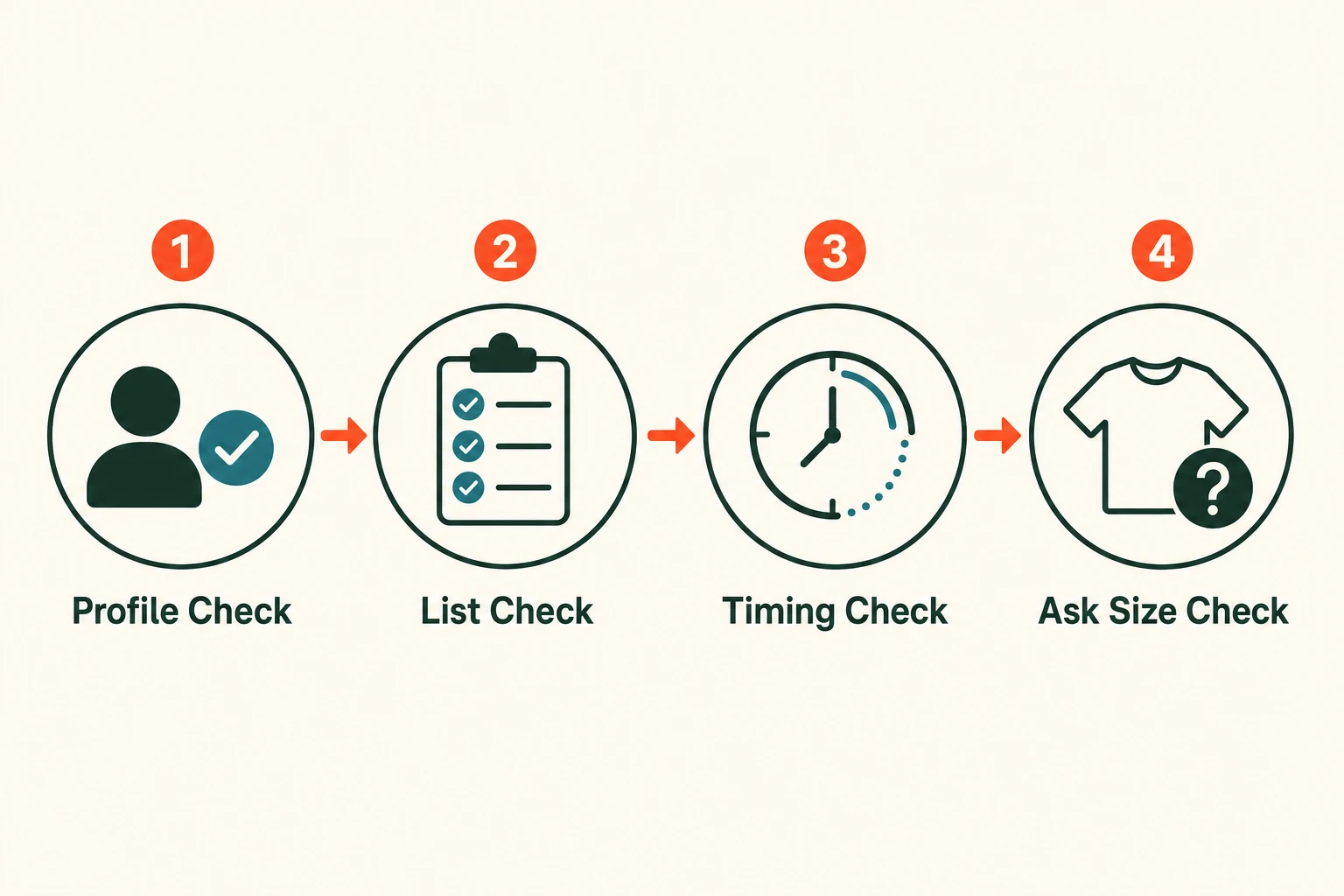
Run these four checks in order before you touch a single line of your outreach copy.
- Profile check. Open your own profile as a stranger would see it. Does the headline name a problem or outcome, or just a title? Are there at least five recent posts showing a point of view? Is the photo a clear headshot?
- List check. Pull ten names from your outreach list at random. For each one: do they own the problem? Do they have authority to act? Is the company a realistic fit by size, stage, and context?
- Timing check. How long after a connection accepts are you sending the first message? If it is under 24 hours, you are pitching before any credibility has been established.
- Ask size check. Is the first message asking for something proportionate to the relationship? A request for a 45-minute demo call from a stranger is a large ask. A short, specific question is not.
If the profile is weak, the list is imprecise, or the timing is off, the message does not matter. Fix those first.
FAQ
Why do people ignore LinkedIn messages even when they seem personalised?
Personalisation in the copy does not compensate for a weak sender profile or a mismatched recipient. If the prospect does not recognise credibility behind the name, or if the problem being pitched is not one they own, the message reads as irrelevant regardless of how well it references their background.
Does your LinkedIn profile affect whether people reply to your outreach?
Directly, yes. A prospect opens your profile before deciding whether to reply. A vague headline, no recent content, and an impersonal photo all reduce the perceived credibility of the sender. The message may be excellent and still go unanswered because the profile did not hold up under a ten-second review.
What should you fix on LinkedIn before sending any cold messages?
Start with the headline, the profile photo, and the content feed. The headline should name the problem you solve. The photo should be a clear headshot. The feed should have recent posts that demonstrate a point of view relevant to the people you are reaching. Without those three, outreach starts at a credibility deficit.
Fix the sender before you fix the message
LinkedIn outreach gets ignored because the sender has not yet earned the right to be heard, not because the message needs another edit. The profile, the targeting, and the gap between connection and first outreach are where reply rate is won or lost.
Get those right and the message becomes the easy part.
If you want to know exactly what is costing you replies before you send another message, get a free LinkedIn profile audit from Signal House and start with a clear picture of what a prospect actually sees when they check you out.
Photos by Vitaly Gariev, RDNE Stock project on Pexels.